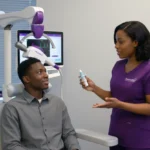
Your first TMS session doesn’t have to feel overwhelming. At Maryland Spravato & TMS Center, we walk patients through every step—motor threshold mapping, coil placement, and treatment—so you know exactly what to expect. TMS is safe, non-invasive, and effective for treatment-resistant depression, helping many patients find lasting relief.

Starting a new treatment can feel intimidating, especially if you’re not sure what to expect. For people living with treatment-resistant depression (TRD), Transcranial Magnetic Stimulation (TMS) offers hope when traditional antidepressants haven’t worked. It’s FDA-approved, non-invasive, and safe, but patients often come to their first appointment with lots of questions.
At Maryland Sparavato & TMS Center, we guide patients through the process step by step. This blog will walk you through your first TMS session in Maryland, covering preparation, the procedure itself, side effects, and what recovery looks like
Table of Contents
What Is TMS Therapy?
TMS therapy uses magnetic fields to stimulate areas of the brain that regulate mood, particularly the prefrontal cortex. Unlike medications, which work systemically, TMS targets brain activity directly.
The Mayo Clinic explains that TMS is an excellent option for people with major depression who haven’t responded to at least two antidepressants.
Before Your First TMS Session
1. Consultation and Evaluation
At Maryland Sparavato & TMS Center, your journey begins with a full evaluation. Your provider will review:
- Medical and psychiatric history
- Previous treatments and medications
- Any contraindications (for example, metal implants near the head)
2. Baseline Assessments
You’ll complete mood questionnaires to track symptoms over time. This helps measure progress objectively.
3. Preparation for the Appointment
- No sedation or anesthesia is required.
- Eat and hydrate normally before your session.
- Remove jewelry or hair accessories that contain metal.
Step One: Motor Threshold Mapping
Your first session includes motor threshold mapping—finding the lowest magnetic strength needed to cause a small twitch in your thumb. This step personalizes treatment intensity for your brain.
According to the National Institute of Mental Health (NIMH), this ensures accuracy and safety.
Step Two: Positioning the Coil
A TMS coil is placed over the left prefrontal cortex of the brain. You’ll sit comfortably in a chair, awake and alert. No sedation means you can return to normal activities afterward.
Patients often hear clicking sounds from the machine and feel a tapping sensation on the scalp. Most describe it as unusual but not painful.
Step Three: The TMS Session
- Length: The first session lasts 60–90 minutes; future sessions are usually 20–40 minutes.
- Sensation: Mild tapping or tingling on the scalp.
- Side Effects: The Cleveland Clinic notes that mild headaches or scalp discomfort are the most common side effects, and they usually fade after the first few treatments.
Step Four: After the Session
- You can drive yourself home.
- You can return to work or school the same day.
- No downtime or recovery period is needed.
Most patients undergo 20–30 sessions over 4–6 weeks. Improvement is often gradual, with many noticing mood changes by the second or third week.
Common Patient Concerns
- “Will it hurt?”
No—most patients describe it as a tapping sensation, not pain. - “When will I feel better?”
Some feel relief within 1–2 weeks, while others take longer. Consistency is key. - “Is it safe long-term?”
Yes. The American Psychiatric Association recognizes TMS as safe with minimal long-term side effects.
Benefits of TMS
- Improved mood and focus
- Reduced anxiety
- Better sleep
- More energy and motivation
- Lasting relief when combined with other therapies
When TMS Might Not Be Right
TMS is not recommended for patients with:
- Metal implants in or around the head (except dental fillings)
- A history of seizures (case-by-case evaluation)
- Severe, uncontrolled medical conditions
How Maryland Sparavato & TMS Center Supports Patients
Our center offers more than just TMS—we provide integrated depression treatment plans:
- FDA-certified TMS administration
- Sparavato (esketamine) therapy for rapid relief when needed
- Medication management to complement TMS
- Therapy and lifestyle support to build long-term resilience
We walk patients through every step, ensuring clarity, comfort, and confidence.
Conclusion
Your first TMS session in Maryland doesn’t have to be intimidating. At Maryland Sparavato & TMS Center, we make the process safe, comfortable, and personalized. TMS therapy offers hope for those living with treatment-resistant depression—bringing structure back to daily life and a renewed sense of possibility.
References
- Mayo Clinic – TMS Overview
- National Institute of Mental Health – Brain Stimulation Therapies
- Cleveland Clinic – TMS Therapy
- American Psychiatric Association – Brain Stimulation
Tags:mentalhealthTMS