

Depression is one of the most common mental health challenges in the U.S., yet for millions of people, traditional treatments like antidepressants or talk therapy are not enough. This condition, often referred to as treatment-resistant depression (TRD), leaves patients and families searching for new solutions.
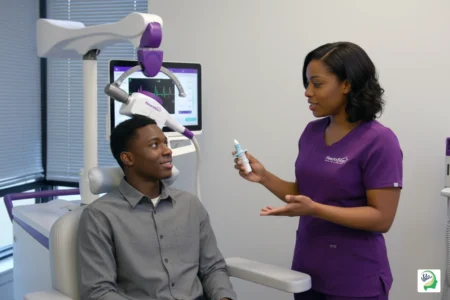
At Maryland Sparavato & TMS Center, we specialize in two breakthrough therapies: Transcranial Magnetic Stimulation (TMS) and Sparavato (esketamine). Individually, both are powerful tools for addressing depression. Together, they offer hope to patients who have struggled for years without relief. This blog explores how these treatments work, why they complement each other, and what patients can expect from a combined treatment approach.
Table of Contents
What Is TMS Therapy?
TMS (Transcranial Magnetic Stimulation) is a non-invasive treatment that uses magnetic fields to stimulate areas of the brain responsible for mood regulation.
According to the Mayo Clinic, TMS is:
- Non-surgical – No anesthesia or invasive procedures required.
- Targeted – Focuses on the prefrontal cortex, the brain area involved in depression.
- Effective – Proven to improve symptoms in patients with TRD.
TMS works gradually over a series of sessions, helping to “reset” brain circuits that regulate mood.
What Is Sparavato (Esketamine)?
Sparavato (esketamine) is an FDA-approved nasal spray derived from ketamine. Unlike traditional antidepressants, which target serotonin, Sparavato acts on the glutamate system in the brain.
The Food and Drug Administration (FDA) approved Sparavato specifically for adults with TRD who have not responded to at least two antidepressants.
Key benefits include:
- Rapid Relief – Many patients notice improvement within hours to days.
- Different Mechanism – Targets brain pathways untouched by standard medications.
- Administered in a Clinical Setting – Ensuring safety and monitoring during treatment.
Why Combine TMS and Sparavato?
At Maryland Sparavato & TMS Center, we’ve seen that combining treatments can deliver more powerful and lasting results.
- Different Mechanisms, Same Goal
- TMS stimulates brain activity externally.
- Sparavato works internally through the glutamate system.
- Together, they target multiple pathways involved in depression.
- Immediate + Long-Term Relief
- Sparavato often provides rapid symptom improvement.
- TMS builds long-term stability through repeated brain stimulation.
- Reduced Risk of Relapse
- Patients receiving both treatments may experience fewer relapses and longer-lasting symptom control, according to early clinical observations and studies shared by the National Institute of Mental Health.
What to Expect With Combined Treatment
1. Comprehensive Evaluation
Before beginning, our providers perform a detailed assessment, including medical history, psychiatric background, and current medications. This ensures the safest and most effective care plan.
2. Personalized Treatment Plan
- TMS sessions are typically scheduled 5 days per week for 4–6 weeks.
- Sparavato is usually administered twice per week initially, then tapered based on response.
3. Clinical Monitoring
- During Sparavato sessions, patients are monitored for two hours after administration, as required by the FDA.
- TMS sessions involve no downtime—you can resume normal activities afterward.
4. Ongoing Adjustments
Our providers tailor treatment as patients progress, adjusting intensity, frequency, and supportive therapies as needed.
Who Benefits Most From Combined Therapy?
Patients who may benefit include those who:
- Have not improved with multiple antidepressants
- Experience severe or recurrent depressive episodes
- Have side effects from medications that limit treatment options
- Want non-invasive, non-sedating alternatives
The American Psychiatric Association recognizes both TMS and esketamine as valid options for TRD, making their combination a natural next step for some patients.
Addressing Concerns About Safety
- Sparavato Side Effects – May include dizziness, dissociation, or nausea. These are monitored closely during clinic visits.
- TMS Side Effects – Usually mild, such as scalp discomfort or headache, which resolve quickly.
- Combined Use – No evidence suggests that combining Sparavato and TMS increases risk; in fact, many patients tolerate the dual approach well.
Supporting Treatments
At Maryland Sparavato & TMS Center, treatment doesn’t stop at TMS and Sparavato. We integrate:
- Therapy – CBT, trauma-informed care, or family therapy.
- Lifestyle Guidance – Sleep, nutrition, and exercise to reinforce brain health.
- Medication Management – Adjusting existing prescriptions to fit with advanced treatments.
When to Seek Help
If you or a loved one experiences depression that has not responded to at least two antidepressants, it may be time to consider advanced therapies. Warning signs include:
- Persistent sadness or hopelessness
- Loss of interest in activities
- Thoughts of self-harm (seek emergency care immediately)
- Fatigue, sleep problems, or appetite changes
The Mayo Clinic emphasizes that early and effective treatment improves long-term outcomes.
How Maryland Sparavato & TMS Center Helps
At Maryland Sparavato & TMS Center, we pride ourselves on being at the forefront of depression treatment. Patients choose us because we provide:
- Comprehensive evaluations to identify the right approach
- FDA-certified Sparavato administration in a safe, supervised environment
- State-of-the-art TMS technology delivered by trained specialists
- Integrated care that combines advanced treatments with therapy and wellness support
- Flexible scheduling to make treatment as accessible as possible
We believe every patient deserves not just symptom relief, but the chance to rebuild their quality of life.
Conclusion
Depression can feel like a battle with no end, especially when traditional treatments don’t work. But hope exists in advanced therapies like TMS and Sparavato. Together, these treatments provide rapid relief and long-term stability, offering new pathways to recovery for people with treatment-resistant depression.
At Maryland Sparavato & TMS Center, we are committed to combining innovation with compassion to help patients move beyond depression and toward lasting wellness.
References
- Mayo Clinic – TMS Therapy
- FDA – Esketamine (Sparavato) Approval
- National Institute of Mental Health – Brain Stimulation Therapies
- American Psychiatric Association – Brain Stimulation Therapies
- Mayo Clinic – Depression Treatment